Delhi's Protest Day: March to the Supreme Court, Jantar Mantar De-notified, and the Voter-Roll Fight
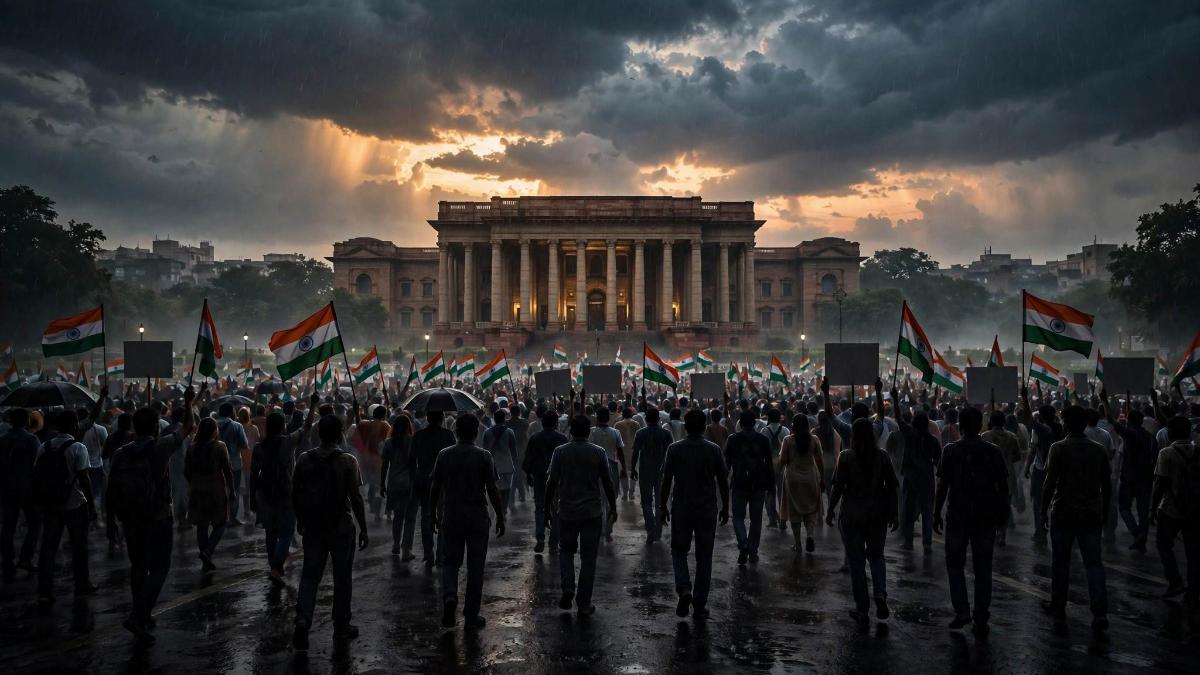
Monday, October 12, 2026, was one of the most politically charged days Delhi has seen this year. Opposition leaders marched to the Supreme Court, the city's most famous protest venue lost its official status, and the Chief Justice of India issued a blunt message to everyone involved: don't drag the court into politics.
Here is what happened, in plain terms.
What happened today
The march. Leaders of the opposition INDIA bloc, including Congress leader Rahul Gandhi and party president Mallikarjun Kharge, led a march to the Supreme Court in the afternoon. Their demand: the resignation of Chief Election Commissioner Gyanesh Kumar over alleged irregularities in the Special Intensive Revision (SIR) of electoral rolls. J&K Chief Minister Omar Abdullah publicly backed the march, saying tens of thousands had joined to demand protection of citizens' democratic rights.
The memorandum. The Congress legal team filed a petition in the Supreme Court — the "Pause SIR" petition, filed by Rahul Gandhi and ten other opposition leaders — seeking ten forms of relief against the Election Commission's decisions relating to the SIR and related matters.
The CJI's message. Chief Justice of India Surya Kant declined to be drawn into the confrontation. His message, widely quoted through the day: don't drag the Supreme Court into politics. The Supreme Court Bar Association separately condemned social media posts demanding the CJI's resignation, saying such remarks undermine the judiciary.
The court's directives. In a significant order, the Supreme Court directed authorities to ensure transport facilities and internet services keep functioning during the protests, and ruled that peaceful, unarmed protesters must not be detained except in accordance with the law. The protests were called by the Cockroach Janta Party (CJP) over the alleged SIR irregularities.
Jantar Mantar de-notified. In a move with long-term consequences, Delhi Police issued a circular de-notifying Jantar Mantar — the capital's most iconic protest venue — as a designated protest site. Three new sites, spread across the city, were listed instead. The circular said a Home Ministry committee had examined alternative venues for citizens' right to protest.
The core dispute: what is the SIR fight about?
The Special Intensive Revision of electoral rolls is a door-to-door verification of voter lists. The Election Commission conducted one in Bihar earlier this year, and the process has since become the single biggest flashpoint between the opposition and the poll body.
The opposition's allegation, in short: the revision process is being used to delete genuine voters. The Election Commission's position: the exercise is a routine cleanup of voter rolls, and the allegations are baseless. BJP leader Anurag Thakur hit out at Rahul Gandhi during the day, arguing that disagreement is a democratic right but allegations need evidence.
A related legal thread: the Supreme Court clarified on Monday that it had never adjudicated the validity of the Election Commission's new Form 6 — the statutory form citizens use to register as voters — noting the modified version did not exist when the court examined the Bihar SIR earlier this year. The court will examine the challenge to it on October 27.
The international angle
The UN Human Rights Office had expressed concern over mass detentions during the Delhi protests and urged authorities to respect peaceful assembly. India dismissed the remarks as "unwarranted" and "unacceptable interference" in internal affairs — a response consistent with New Delhi's long-standing position that it does not accept external commentary on domestic law-and-order matters.
Why it matters
Three things make today significant beyond the headlines:
- The venue shift. De-notifying Jantar Mantar changes where and how Delhi protests happen. The three replacement sites will now be tested — by protesters, by police, and eventually by the courts.
- The court's balancing act. The Supreme Court simultaneously refused to become a political stage (the CJI's message) and asserted strong protections for peaceful protest (no arbitrary detentions, keep transport and internet running). That duality will shape every protest-related case going forward.
- October 27. The Form 6 challenge hearing is now the next big date. Whatever the court decides will set the terms for how voter registration works across the country.
What comes next
In the short term: watch whether the Election Commission responds to the resignation demand (it has given no indication it will), how the new protest sites function in practice, and whether the October 27 hearing produces interim directions on Form 6. In the longer term, the SIR dispute is now the central battle over the credibility of India's electoral machinery — and neither side is backing down.
This is a developing story. Key facts are drawn from reporting by the Indian Express, Hindustan Times, Times of India, NDTV and News9 on October 12, 2026.
Like and comment on the interactive version of this post.
← All posts