Elon Musk vs Mukesh Ambani: What Is Behind the Starlink India Controversy?
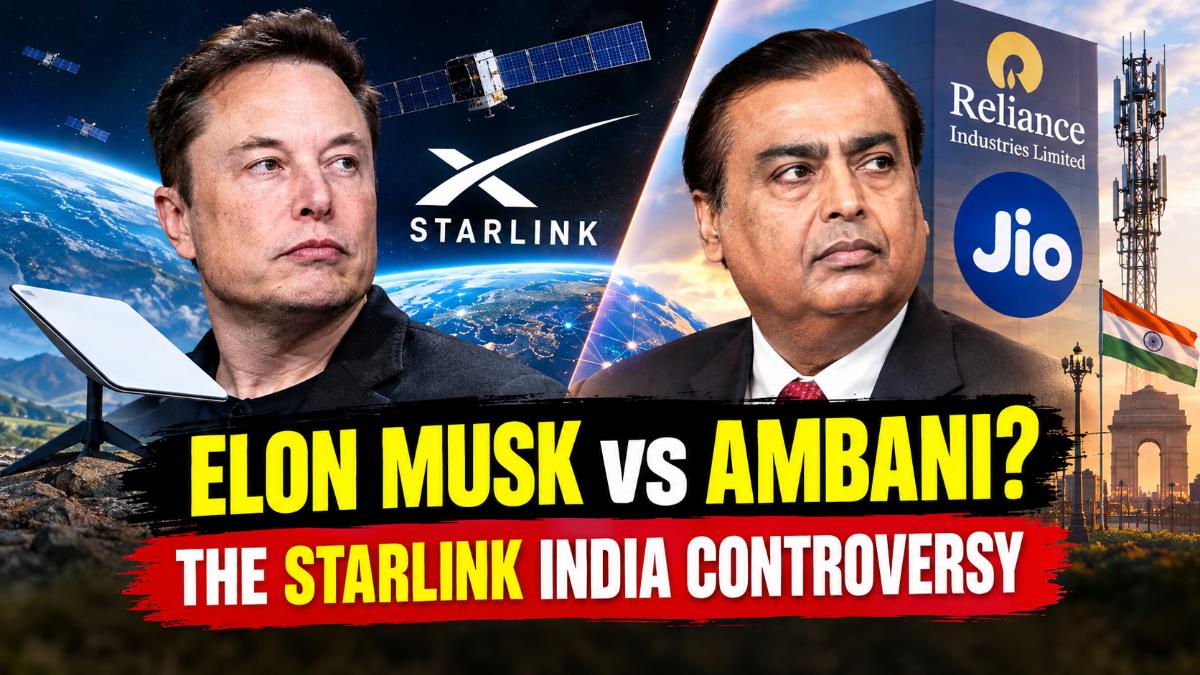
Elon Musk Asks, “Is Ambani the Real Boss of India?” — What Is Behind the Starlink Controversy?
Elon Musk is once again making headlines over India's telecommunications industry. This time, the controversy revolves around the delay in launching his satellite internet service, Starlink, in India.
On October 8, 2026, Musk raised a question about Reliance Industries Chairman Mukesh Ambani on the social media platform X, triggering a fresh debate about satellite internet, competition in India's telecom market, and government approvals.
But what exactly happened? Why has Starlink's entry into India become a subject of controversy? And what does this mean for India's internet industry?
Let's examine the facts.
- What Did Elon Musk Say About Mukesh Ambani?
Elon Musk questioned why Starlink was still facing delays in entering the Indian market.
In his post on X, Musk claimed that Starlink had obtained licenses in more than 165 countries and had spent years trying to comply with India's requirements.
He then raised a pointed question:
"Is Ambani the real boss of India?"
The comment directly brought Mukesh Ambani, chairman of Reliance Industries, into the discussion.
However, an important distinction must be made: Musk's statement is an allegation, not proof that Ambani or Reliance Industries improperly influenced the government's approval process.
There is no publicly established evidence in the cited reporting proving that Reliance deliberately blocked Starlink's entry into India.
- Why Is Starlink's Entry Into India Facing Delays?
Starlink is a satellite internet service operated by SpaceX, the aerospace company founded by Elon Musk.
Unlike conventional broadband services that rely on extensive ground infrastructure, Starlink uses satellites in low Earth orbit to provide internet connectivity.
This technology could be particularly useful in remote villages, mountainous regions, and other areas where traditional broadband infrastructure is difficult or expensive to deploy.
However, launching a satellite internet service in India requires more than deploying satellites.
Companies must satisfy applicable licensing conditions, security requirements, and spectrum-related regulations before offering commercial services.
These regulatory requirements are central to the debate surrounding Starlink's proposed entry into India.
- What Is the Indian Government's Position?
India's telecommunications regulatory framework includes licensing, security, and technical requirements for satellite communication services.
The government has maintained that companies must comply with applicable requirements before receiving permission to operate.
Musk's criticism has raised questions about whether the approval process is sufficiently transparent and efficient.
However, the existence of regulatory delays does not, by itself, establish that a competitor has influenced the government improperly.
As of October 9, 2026, readers should verify the latest official announcements before drawing conclusions about Starlink's final authorization or commercial launch date.
- Why Is Mukesh Ambani Part of This Debate?
Mukesh Ambani's Reliance Industries operates Jio, one of India's major telecommunications businesses.
Starlink, meanwhile, aims to provide internet connectivity through satellite technology.
If Starlink launches commercially in India, it could offer an additional connectivity option, particularly in locations where traditional broadband services are limited.
However, satellite internet and conventional mobile networks do not serve exactly the same needs.
Their pricing, coverage, equipment requirements, network performance, and intended customers can differ significantly.
Consequently, Starlink's potential entry should not automatically be interpreted as a direct replacement for Jio or other Indian telecom operators.
The broader issue concerns how India manages competition, security requirements, and access to emerging communications technologies.
- Did the Controversy Become Political?
The discussion also attracted political attention.
According to an October 9, 2026, report by India Today, Congress leader and Leader of the Opposition Rahul Gandhi responded to Musk's remarks with a comment suggesting that he should wait until he learned about another person.
Some observers interpreted the remark as an indirect reference to industrialist Gautam Adani.
However, Gandhi did not explicitly identify the person in that post.
This distinction matters because interpretations of a political statement should not be presented as a confirmed accusation.
The episode has nevertheless expanded the discussion beyond business competition to questions about the relationship between major corporations, government regulation, and India's economic landscape.
- What Could Starlink Mean for Indian Internet Users?
Starlink's potential launch could have several implications for India's digital economy.
Better Connectivity in Remote Areas
Satellite internet could provide an alternative for communities where installing conventional broadband infrastructure is difficult.
More Options for Businesses
Businesses operating in remote locations could gain another option for maintaining internet connectivity.
Opportunities for Digital Services
Reliable connectivity can support online education, digital businesses, remote operations, and access to online services.
Potential Changes in Competition
A new service provider could expand consumer choice. However, whether this leads to lower prices or better service will depend on the company's commercial strategy and the wider market.
There are also challenges, including equipment costs, subscription prices, regulatory requirements, and differences in performance across locations.
For many Indian households, affordability will be one of the most important factors determining whether satellite internet becomes a practical option.
- When Will Starlink Launch in India?
A definite launch date should not be assumed without confirmation from official sources.
Starlink's commercial launch depends on obtaining the necessary approvals and satisfying the applicable regulatory conditions.
An initial authorization or a report about progress toward approval does not necessarily mean that commercial services are already available.
Readers should therefore check the latest announcements from Starlink and India's Department of Telecommunications before relying on any reported launch date.
Conclusion: The Bigger Question Goes Beyond Musk and Ambani
Elon Musk's remarks have reignited a debate about satellite internet, telecommunications competition, and regulatory transparency in India.
On one side, Musk has questioned the delay affecting Starlink's entry into the country. On the other, India's regulatory framework requires companies to satisfy applicable licensing and security conditions.
The available evidence does not establish that Mukesh Ambani or Reliance Industries improperly prevented Starlink from entering India.
The next important developments will be the progress of the approval process, the timing of any commercial launch, and the prices at which satellite internet services may be offered to Indian customers.
Ultimately, the most important question for consumers is straightforward:
Will satellite internet provide Indians with a reliable, accessible, and affordable alternative for getting online?
That is the question worth watching as India's digital infrastructure continues to evolve.
Sources and Further Reading
Before publication, verify the original reporting and the latest official regulatory announcements.
- Financial Express — Reporting on Musk's comments about Starlink's entry into India.
- Mint — Coverage of the Starlink licensing controversy.
- India Today — Reporting on political reactions to Musk's remarks.
- Department of Telecommunications, Government of India — Official regulatory announcements.
Editorial note: Attribute allegations to the people making them, distinguish confirmed facts from interpretations, and verify the current licensing status before publishing.
Like and comment on the interactive version of this post.
← All posts