India–US Trade Deal Is Nearly Done — So Why Can't They Sign It Yet?
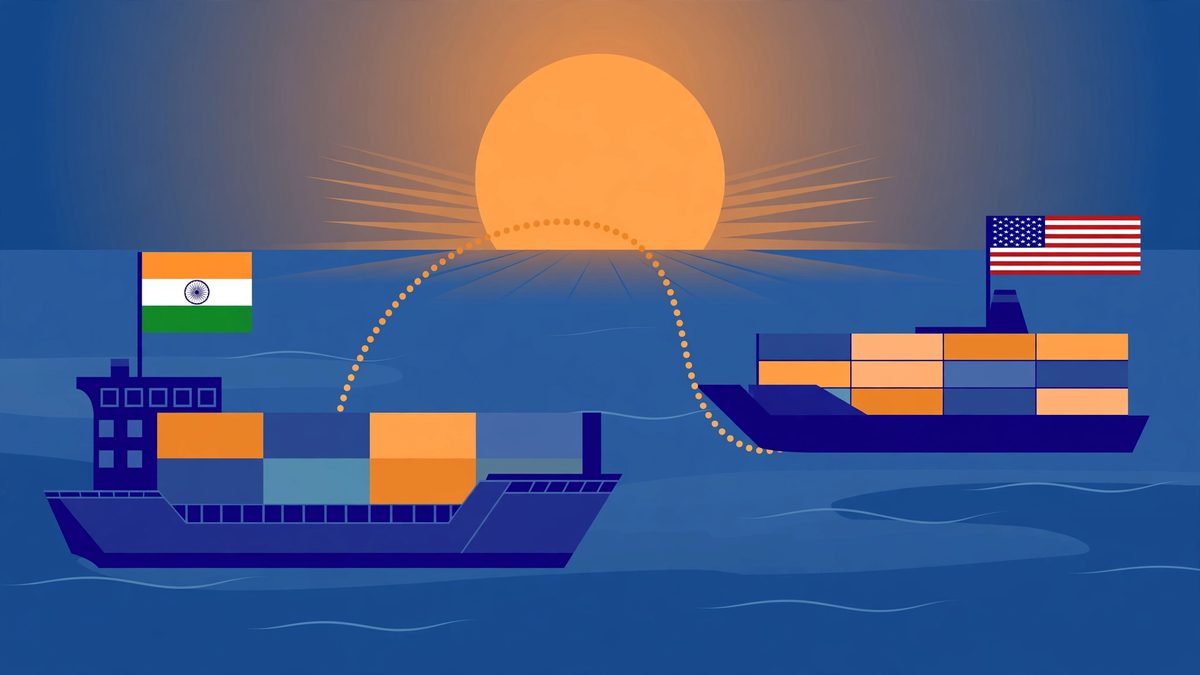
Here is a strange situation in world trade: India and the United States have agreed on nearly everything in their trade deal — and still cannot sign it.
On 18 November 2026, Commerce Secretary Rajesh Agrawal said it plainly at a FICCI event in New Delhi: "Every aspect of the deal has been more or less finalised, and we will be concluding the negotiations soon." The only problem, he said, is on the American side. The deal was negotiated against a set of US tariffs that no longer exist — because the US Supreme Court struck them down. Until Washington builds a new tariff framework, there is nothing to sign.
It is a deal that is done, waiting for a signature that needs a law that does not exist yet. And it matters far beyond the negotiating rooms in Delhi and Washington.
What the deal actually is
The two countries announced a framework for an interim trade agreement in February 2026. Under it, Washington agreed to cut its reciprocal tariff on covered Indian goods — textiles, apparel, footwear and more — from 25% to 18%, and to remove an additional 25% tariff that had been imposed on Indian goods because of New Delhi's purchases of Russian energy.
That framework was a big deal for Indian exporters. The United States is India's largest trading partner, and for labour-intensive sectors like textiles and garments, a few percentage points of tariff can decide whether an order goes to a factory in Tiruppur or to a competitor in Bangladesh or Vietnam.
But later that same month, the US Supreme Court ruled that the emergency powers law — the International Emergency Economic Powers Act, or IEEPA — did not authorise the reciprocal tariffs President Donald Trump had imposed. The tariffs fell. The US then imposed a blanket 10% tariff on all goods entering the country, and began building a replacement tariff architecture, including investigations under Section 301 of the US Trade Act of 1974.
So the deal's foundation shifted under it. The 18% figure was negotiated against a tariff regime that a court has since erased.
The assurance India wanted
India had one clear precondition before going ahead: a comparative advantage over competitor countries. In plain language, Indian goods should face lower US tariffs than the same goods from rival exporters. Without that edge, the deal would be paperwork without profit.
On 14 November 2026, that assurance reportedly arrived. The US told India it would get lower tariffs than its trading peers once Washington finalises its tariff structure. A two-member US negotiating team had visited India in early November and made substantial progress on the text of the deal, Agrawal confirmed. Commerce Minister Piyush Goyal has said India negotiated a very good deal, and that an announcement could come quite soon.
Both sides are now working to conclude the interim deal by the end of the current financial year.
Why the delay is not a failure
It is tempting to read any delay as a breakdown. This one is different. Three things are worth understanding.
First, trade deals are not signed on promises; they are signed on tariff lines. A tariff line is the exact duty on a specific product — a cotton shirt, a leather shoe, a steel component. If the US tariff system is being rebuilt, the numbers in the deal have to be re-anchored to the new system, or the agreement would be unenforceable on day one. Waiting is not weakness; it is how you avoid a deal that collapses in court.
Second, the delay cuts both ways. While Washington rebuilds its tariff architecture, Indian exporters keep selling under the current 10% blanket tariff. That is not ideal, but it is also not the 25% or higher rates that were threatened earlier in the year. The worst case has already been avoided; the deal is about locking in something better.
Third, the Section 301 investigations now under way in the US could still add new tariffs. India has reportedly reserved the right to modify its concessions if Washington imposes tariffs beyond what is committed. That is a sensible insurance clause — and it is exactly the kind of detail that takes time to get right.
What it means for ordinary Indians
Trade deals sound abstract, but this one touches real livelihoods.
For exporters in textiles, apparel, footwear and leather — sectors that employ millions, many of them women in small towns — a lower US tariff means more orders, steadier work and better bargaining power against competitors. A 7-percentage-point cut, from 25% to 18%, can be the difference between winning and losing a large American buyer.
For consumers, a deal that lowers Indian tariffs on some US goods could eventually mean cheaper imported products, from industrial inputs to certain foods. But the first phase of this deal covers goods only; services — including India's large IT services exports — come in later rounds. So the benefits will arrive in stages, not all at once.
And for the wider economy, the deal is a signal. India has been negotiating trade agreements at a pace not seen in decades — with the UK, the EU and now the US. Each deal makes India a more predictable place to manufacture and invest in. That is the long game behind the headlines.
The lesson: done is not the same as signed
The India–US trade deal teaches something useful about how big agreements actually work. Negotiation is only half the job. The other half is the legal and institutional machinery that makes an agreement real — the tariff schedules, the court rulings, the investigations, the fine print.
India and the US have done the hard part: they agree. What remains is the slower, drier part: rebuilding the framework the agreement sits on. It is frustrating to watch, and it is also how durable deals are made.
The next marker to watch is not another press statement. It is the outcome of the US Section 301 investigations and the new tariff architecture that follows. When those land, the signing should follow quickly — and Indian exporters will finally know the exact number that decides their next order.
Until then, the deal is nearly done. And nearly, in trade, is a very specific place to be.
On 18 November 2026, Commerce Secretary Rajesh Agrawal said negotiations on the India–US interim trade agreement were in their final stages, with signing awaiting a new US tariff framework after the Supreme Court struck down reciprocal tariffs imposed under IEEPA. India and the US announced the interim deal framework in February 2026, under which the US agreed to an 18% reciprocal tariff on covered Indian goods.
Like and comment on the interactive version of this post.
← All posts