NASA's $30 Billion Plan for a Permanent Moon Base, Explained
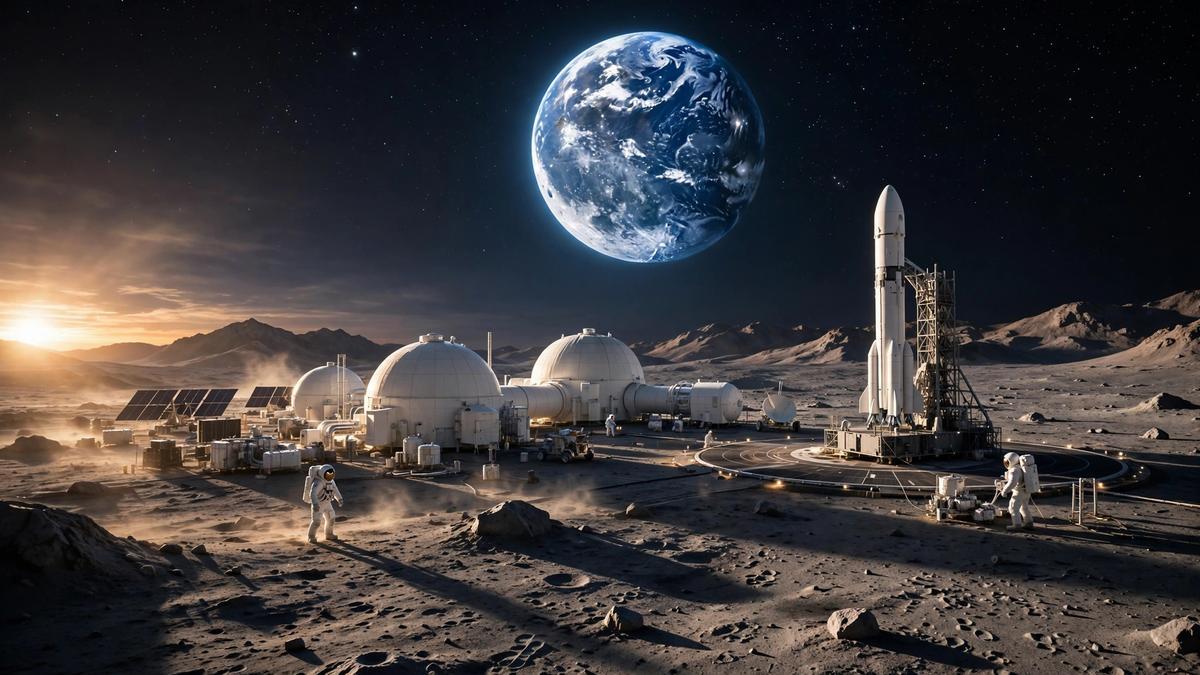
This week, NASA's Moon ambitions took a concrete step forward. According to reporting published on October 8, 2026, the agency is close to announcing bulk purchases of rocket launches to build a permanent base on the Moon — the most serious move yet from a space race that has been mostly promises and renders.
What is NASA actually buying?
Instead of booking one launch at a time, NASA plans to buy launches in bundles — several at once — to supply its lunar programme. The agency's moon base programme manager told reporters that the first round of these bulk buys will likely be announced "in the near future."
The logic is simple: you cannot build a base on the Moon with one rocket at a time. You need a pipeline.
Why now?
A big driver is the retirement of the workhorse. SpaceX's Falcon 9 — the rocket that has carried the bulk of missions for over a decade — is being phased out, and NASA needs to spread its launches across a new generation of vehicles.
The price tag and the timeline
The broader lunar programme is expected to cost roughly $30 billion. Here is how NASA plans to spend it, in two phases:
- Through 2028: send landers and rovers to scout locations and resources — basically, pick the neighbourhood and check what's in the ground.
- From 2029: the heavy lifting begins. NASA expects to transport as much as 60 metric tons of equipment to the surface — power generation, habitats, and the infrastructure a permanent base needs.
Who wants the contracts?
SpaceX's rivals see a once-in-a-generation opportunity. The names in the running include Rocket Lab, Blue Origin's New Glenn, United Launch Alliance's Vulcan, plus newer players like Relativity Space, Firefly Aerospace, and Stoke Space.
But there is a reality check buried in the excitement: most of these rockets have not flown yet, and ramping up production to serve a Moon base will take years. The companies that can deliver reliably will get the highest-margin business in the industry — NASA missions.
Why this matters beyond NASA
A permanent Moon base is not just about science. It is about who controls the infrastructure of the next economy — launch capacity, lunar resources, and the gateway to Mars. When the world's largest space agency starts buying rockets like cargo containers, the message is clear: the Moon is open for business.
This story is still developing. When NASA announces that first round of bulk buys, the winners and losers of the new space race will become much clearer.
Like and comment on the interactive version of this post.
← All posts