One Million Satellites: What SpaceX's Starmind Approval Really Means
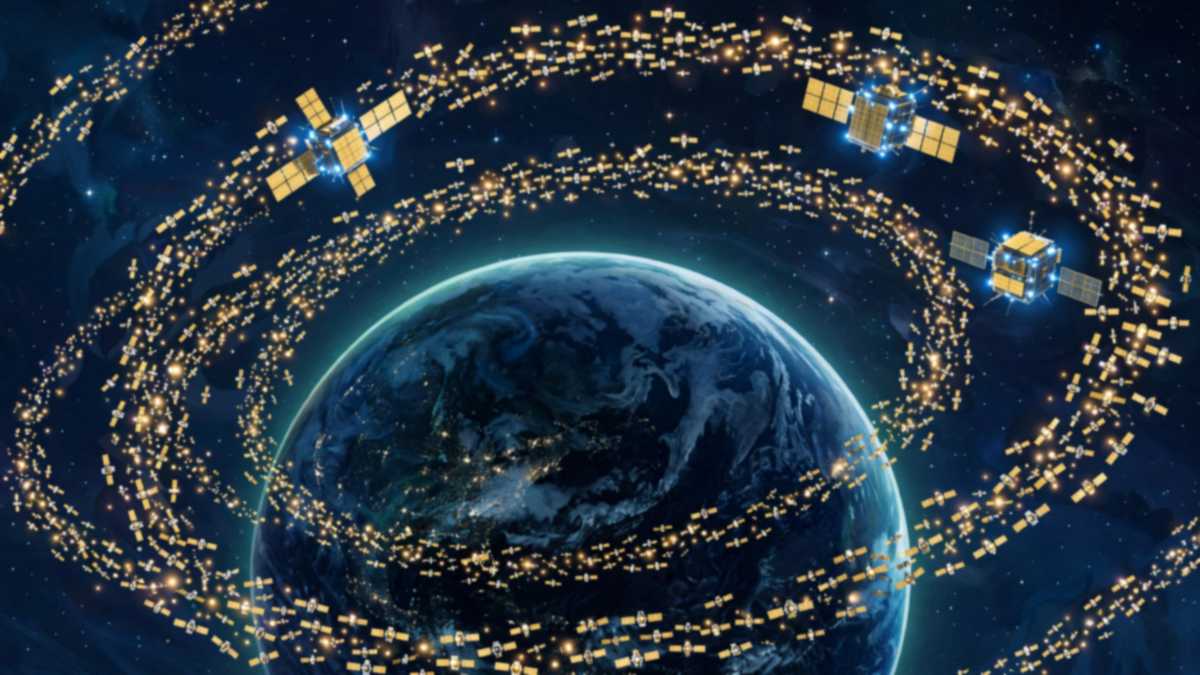
On Wednesday, 25 November 2026, the US Federal Communications Commission did something no regulator has ever done before: it authorised a company to put one million satellites into orbit — not for internet, not for navigation, but as data centres in space.
The company is SpaceX. The constellation is called Starmind. And the number is so large that it is worth pausing on it: one million satellites is roughly fifty times the number of working satellites orbiting Earth today.
The approval is real. The timeline is the hard part.
What exactly was approved?
SpaceX applied to the FCC on 30 January 2026 for a constellation of up to one million satellites that would process artificial intelligence workloads in orbit. In the company's own words, Starmind is about "capturing solar energy in space to power low-cost, high-performance AI compute for Earth."
The FCC granted the licence on 25 November, calling it the first authorisation in US history for a constellation of space-based data centres. Chairman Brendan Carr framed it as a milestone in the AI race: demand for computing power is growing so fast that the ground can no longer hold it all.
The licence comes with a schedule: the first Starmind satellite by November 2033, 100,000 by November 2035, half the constellation by November 2038, and the full million by November 2040. One condition is worth noting: the FCC refused SpaceX's request to park dead satellites in so-called graveyard orbits. Instead, retired satellites must be brought down to burn up in the atmosphere — a small but meaningful guardrail for a constellation of this size.
Why put a data centre in space at all?
The pitch is simple, and it is not crazy. A data centre on Earth needs two things that are getting expensive: electricity and cooling. In orbit, sunlight is constant and free — no night, no clouds — and the cold of space can carry heat away without the vast water consumption of ground-based cooling. AI is what makes the pitch urgent: training and running modern models consumes enormous amounts of power, and the build-out is already straining grids and water supplies. SpaceX says its first orbital data centres will fly in 2027.
The scale problem
Here is where the story gets honest. Today there are about 17,100 working satellites in orbit, according to astrophysicist Jonathan McDowell's widely cited catalogue (26 October 2026). About 11,150 of them — roughly two in three — are SpaceX's own Starlink satellites.
A million Starmind satellites would be nearly sixty times that total. And the launch maths is brutal: a record 4,526 satellites were launched in all of 2025. At that pace, putting a million satellites in orbit would take more than two centuries. Even Starlink, the fastest constellation build-out in history, took seven years to reach 11,000 satellites.
SpaceX's answer, presumably, is Starship — a vehicle designed to carry far more satellites per launch than anything flying today. But Starship would still need to fly at a cadence the world has never seen, thousands of times a year, for over a decade. The FCC's milestones are the test: 100,000 satellites by 2035 means averaging tens of thousands of launches a year within a decade of the first satellite.
What the sceptics are saying
Scientists greeted the announcement with a mix of awe and alarm, and their concerns are concrete.
The first is the night sky. Astronomers already struggle with light pollution from Starlink's 11,000 satellites; a million bright objects would change what the sky looks like from everywhere on Earth, including for the telescopes that map asteroids and study the early universe.
The second is debris. McDowell's catalogue already tracks about 35,000 objects in orbit, and the European Space Agency estimates there are around 1.5 million fragments between one and ten centimetres across — too small to track, fast enough to disable a satellite. In a constellation of a million, even a tiny failure rate means thousands of dead objects to manage.
The third is governance. Orbit is a shared resource, and there is no global traffic authority for space. One company's licence from one country's regulator effectively sets the facts in the sky for everyone else.
What it means
Starmind matters even if it is never fully built, because it reveals where the AI race is heading. The argument that computing demand has outgrown the ground is now official US policy, not just a company pitch. If data centres move to orbit, the questions we argue about on Earth — energy, water, land, regulation — will follow them up there, along with new ones about debris and the sky itself.
For India, the story is worth watching closely. The country is building its own space and AI ambitions — from ISRO's launch capacity to a growing domestic data-centre industry — and the rules of orbital computing will be written while this constellation is debated.
The FCC's licence runs to 2040. Whether Starmind becomes the largest machine ever built, or the largest permission slip ever granted, will be decided by rockets, not paperwork. The first real test comes in 2027, when SpaceX says the first orbital data centres will fly.
Sources: Reuters, CNN, The Wall Street Journal, Gizmodo, Engadget and Jonathan McDowell's satellite catalogue (planet4589.org), 25–26 November 2026.
Like and comment on the interactive version of this post.
← All posts