What Is AI ProVisual Engine? How AI Is Changing Smartphone Photography
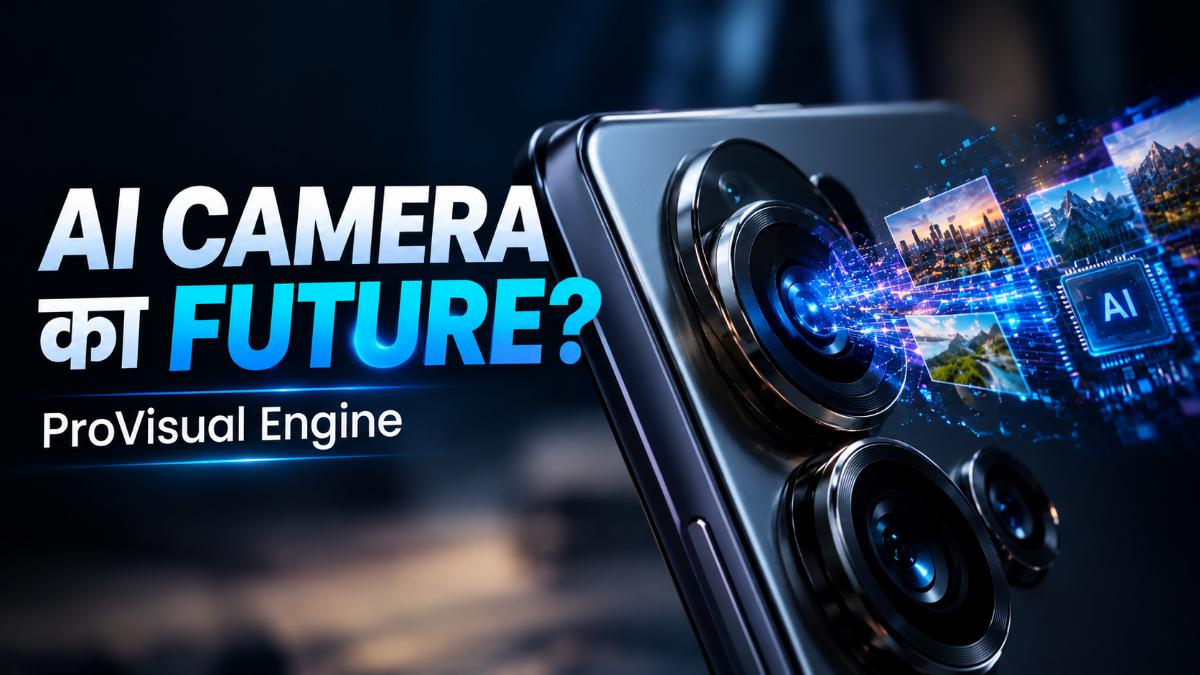
Smartphone camera competition is no longer limited to megapixels. Today, the AI and computational photography working behind the camera can be just as important as the camera hardware itself.
Samsung’s ProVisual Engine is one example of this shift. Samsung introduced the ProVisual Engine with the Galaxy S24 series as an AI-powered imaging system designed to improve the photography experience—from capturing an image to processing and editing it.
But what exactly is the ProVisual Engine, and how is AI changing smartphone photography?
What Is ProVisual Engine?
In simple terms, the ProVisual Engine can be understood as an AI-powered image processing system built into supported Samsung Galaxy devices.
When you take a photo, the information captured by the camera sensor does not simply become the final image. The smartphone processes that information using different technologies to improve aspects such as exposure, colours, noise, detail and subject appearance.
Samsung uses AI-based processing as part of its imaging system to improve image capture and editing capabilities.
What Does AI Do in a Smartphone Camera?
AI-powered image processing can help a smartphone camera handle several challenging photography situations.
1. Better Low-Light Photography
Low-light photography is one of the biggest challenges for smartphone cameras.
When there is not enough light, images can contain more noise and lose fine details. Computational photography can combine information from multiple frames and analyze the scene to reduce noise while preserving as much detail as possible.
Samsung uses its ProVisual Engine alongside features such as Nightography to improve low-light photography on supported Galaxy devices.
2. Improving Zoom Details
Digital zoom can cause images to lose detail and appear blurry.
AI-powered processing can analyze the available image information and use computational techniques to improve the appearance of zoomed-in images.
Samsung has described AI processing and multi-frame techniques as important parts of its approach to improving zoom and image quality.
However, AI cannot completely replace optical zoom. The quality of the camera sensor, lens and optical system still matters.
3. Better Colours and Skin Tones
A good smartphone camera is not simply about capturing more detail. It also needs to produce colours that look natural and balanced.
Modern computational photography systems can analyze scenes and subjects to optimize colour, texture and skin tones.
Samsung has highlighted improvements in these areas with newer generations of its ProVisual Engine.
The goal is not simply to make an image brighter or more colourful, but to produce a result that looks more realistic and visually pleasing.
4. Photo and Video Processing
AI is no longer limited to taking still photographs.
Modern smartphones increasingly use AI and computational photography for video processing and editing as well.
For example, Samsung’s Galaxy devices combine ProVisual Engine technology with features such as Nightography, Super HDR video, Generative Edit and Instant Slow-mo, depending on the device and software version.
This shows how smartphone imaging is becoming an entire computational system rather than simply a collection of camera lenses.
Is ProVisual Engine a Separate AI App?
No.
ProVisual Engine is not a standalone application that you can download from the Google Play Store.
It is integrated into supported Samsung Galaxy camera and imaging systems and works together with the smartphone’s camera hardware, processor and image-processing software.
You generally experience its effects through the camera and editing features rather than opening a separate ProVisual Engine app.
How Far Has ProVisual Engine Come in 2026?
Samsung continues to develop its imaging technology in newer Galaxy smartphones.
The Galaxy S26 Ultra, for example, uses an updated imaging system that combines improved camera hardware with Samsung’s ProVisual Engine. Samsung says the combination is designed to improve low-light photography, reduce noise and preserve image details.
This highlights an important change in the smartphone industry:
Smartphone photography is no longer just a camera-sensor competition. It is a combination of hardware, processors, software and AI.
A smartphone with a powerful sensor can produce excellent results, but the processing pipeline determines how much of that captured information ultimately appears in the final photo.
Does More Megapixels Mean a Better Camera?
Not necessarily.
A 200MP camera may sound impressive on paper, but megapixel count is only one part of smartphone camera quality.
Other important factors include:
- Sensor size
- Lens quality
- Aperture
- Image Signal Processor (ISP)
- AI and computational photography
- Multi-frame processing
- Optical and electronic stabilization
- HDR processing
- Software tuning
That is why it would be incorrect to assume that a 200MP smartphone will automatically take better photos than a 50MP smartphone in every situation.
Camera performance is the result of the entire imaging system—not just the number printed next to “MP.”
The Future of AI-Powered Smartphone Photography
AI is likely to become an even bigger part of smartphone photography.
Instead of simply capturing what the camera sees, future smartphones will increasingly analyze the scene, understand subjects, optimize exposure, improve colours, reduce noise and assist with editing.
This could make computational photography one of the most important areas of smartphone development.
The camera lens and sensor will still matter, but the intelligence processing the captured information will matter just as much.
Conclusion
The AI ProVisual Engine is an example of how artificial intelligence and computational photography are changing smartphone cameras.
The biggest change is that smartphone photography is no longer determined solely by megapixels, lenses or sensors. AI-powered image processing can play an important role in turning raw camera data into the final photograph.
Samsung’s continued development of ProVisual Engine technology also reflects a wider industry trend: the future of smartphone photography is increasingly about combining powerful camera hardware with intelligent AI-powered processing.
As smartphone cameras become more computational, the question will not simply be:
“How many megapixels does the phone have?”
It will increasingly be:
“How intelligently can the phone process what its camera captures?”
Like and comment on the interactive version of this post.
← All posts