Your Voter Form Was an Open Book: What the ECI Form 6 Data Exposure Really Means
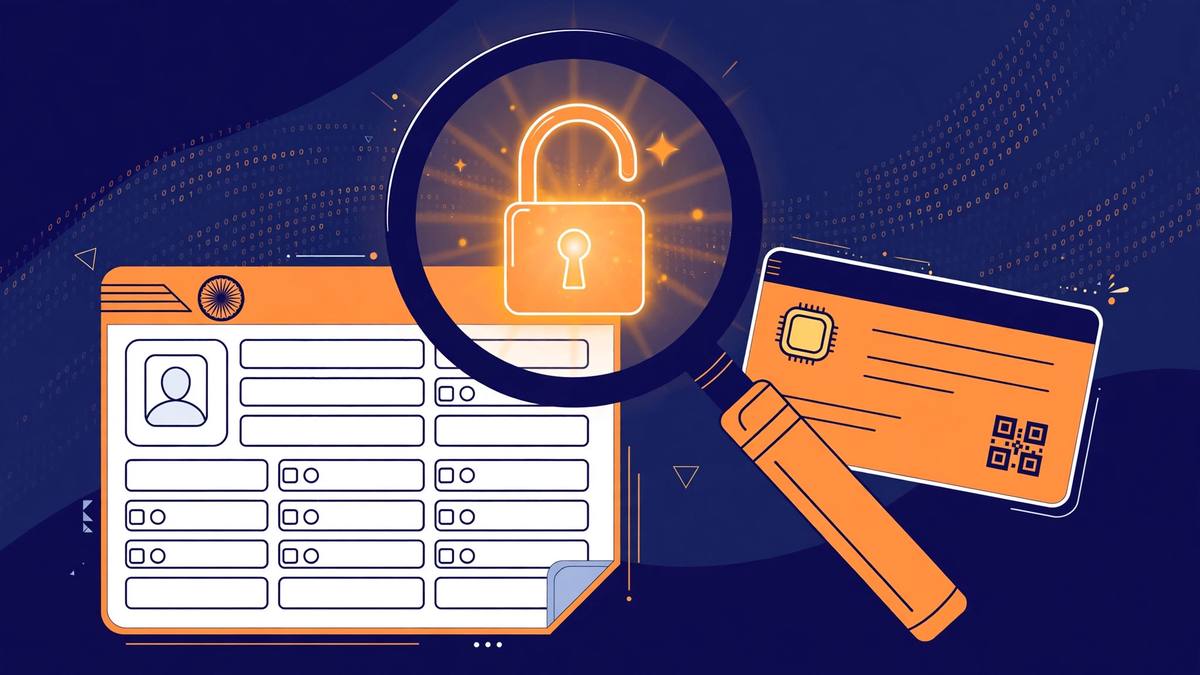
Imagine filling in a government form with your name, your father's name, your phone number, your home address, your photograph and your Aadhaar details — and then discovering that anyone with a login on the same website could read all of it, simply by changing a number in the web address.
That is what a report by Charchagram, a civic-tech initiative that builds tools for transparency in Indian public systems, says happened on the Election Commission of India's Citizen Service Portal. According to the report, published on 23 November 2026, the personal data submitted through Form 6 — the application to register as a voter — was exposed for at least three years.
This is not a story about hackers breaking into a server. It is a story about a door that was never locked.
What exactly was exposed?
Form 6 is the form every new voter fills in. It is not a light document. Each application holds a citizen's name, their relative's name, gender, phone number, email address, home address, photograph, Aadhaar details, and the age-proof and address-proof documents they uploaded.
The report says that opening voters.eci.gov.in/form6?refId=<reference ID> returned a web page showing all of an applicant's details to any logged-in user — regardless of who the applicant was. There was no check that the application belonged to the person asking for it.
Worse, the reference IDs followed a predictable pattern based on state, constituency, type and date or sequence. That predictability, the report notes, turns a single leak into a harvest: anyone could have walked through the IDs one by one and scraped the data in bulk.
Using the Election Commission's own published data, the report estimates that at least seven crore Form 6 enrolments took place in the period it verified. Records going back to 2023 were checked — and, the report adds, there was nothing to suggest earlier records were protected, so the exposure may run longer than three years.
How was it found — and what happened next?
Charchagram says it found the flaw by auditing the front-end code of the portal, which is publicly available. "We audited the front-end code available in public. And while auditing, [we] found that there is URL through which anyone can access Form 6 data of other voters," data scientist Saurav Rajput told The Hindu.
Crucially, the researchers did what responsible disclosure is supposed to look like: they reported the matter privately to the Election Commission and to CERT-In, India's national agency for responding to computer security incidents. They asked for a fix within seven days, plus written acknowledgement and confirmation when it was done.
CERT-In replied on 13 November, acknowledging the issue and saying it was in the process of taking action with the concerned authority. But the reply gave no reference number, no timeline and no commitment to close the loophole.
"Neither the ECI nor CERT-In has confirmed that a fix was made, when, or whether it covers the server. Citizens whose data was exposed have not been told," Rajput said. The Election Commission had not responded to The Hindu's query at the time of publication.
There is one piece of good news. Since 20 November, the Form 6 page's code now ignores the reference ID — a change in the portal's code means no details can be seen through that URL any more. But a code change that closes a front door is not the same as a confirmed, server-side fix — and nobody has told the citizens affected.
Why this bug is so ordinary — and so worrying
Security professionals have a name for this kind of flaw: a broken access control, sometimes called an insecure direct object reference. It is one of the most common vulnerabilities in web applications, and one of the most preventable. The server simply has to ask one question before serving data: does this record belong to the person asking? Here, apparently, it never asked.
Three things make this case stand out.
First, the scale. Seven crore applications is not a niche dataset. It is a large slice of India's electorate, and the data involved — Aadhaar details, addresses, photographs, identity documents — is exactly the material used for identity theft, SIM-swap fraud and targeted phishing.
Second, the duration. Three years, at least, is a long time for a flaw this simple to sit in a system that handles the personal data of hundreds of millions of people. The longer an exposure runs, the harder it is to say nobody exploited it. The report does not claim anyone did — but nobody can prove nobody did, either.
Third, the silence. A data breach is bad; a data breach nobody tells you about is worse. Citizens cannot protect themselves against a risk they do not know exists. They cannot watch for misuse of their Aadhaar number, change a compromised phone number, or be alert to fraud built on their own documents — unless someone tells them.
What should you do?
There is no panic button here, and no single action fixes a three-year exposure. But there are sensible steps.
Be extra suspicious of calls, messages or emails that know your personal details. A scammer who already knows your name, address and Aadhaar-linked phone number sounds far more convincing than one who does not. Remember: no bank, no government office and no election official will ask for your OTP, your UPI PIN or your full Aadhaar number on a call.
Watch your accounts. If you use Aadhaar-based services, keep an eye on your bank statements and on any SMS alerts about changes to your accounts. Consider locking your Aadhaar biometrics through the UIDAI portal if you have not already — it is free, and it stops your fingerprints or iris scan from being used for authentication without you unlocking them first.
And ask questions. Citizens have a right to know whether their data was exposed, whether the fix is complete, and whether anyone accessed their records. The Election Commission and CERT-In owe the public a clear, dated statement — not just a quiet code change.
The bigger lesson
India is digitising its democracy at remarkable speed. Voter registration, enumeration and roll revision now run through centralised portals like ECINET. That digitisation brings real convenience — but it also concentrates risk. A paper form in a district office can only be read by someone standing in that office. A web form with a predictable ID can be read by anyone, anywhere, at machine speed.
The fix for that is not exotic technology. It is the basics: check ownership on the server before serving personal data, use unpredictable identifiers, audit systems regularly, and tell people promptly when something goes wrong.
The researchers who found this flaw did everything right — they audited public code, reported privately, and gave the authorities time to fix it before going public. The institutions now need to match that standard: confirm the fix, explain what happened, and tell the citizens whose data was on display.
Because a voter's trust is not just about the vote being counted. It is about the form they filled in being kept safe.
This post is based on a report by Charchagram, as reported by The Hindu on 23 November 2026. The Election Commission of India had not responded to queries at the time of that report. The figures cited — at least three years of exposure, records verified back to 2023, and an estimated seven crore Form 6 enrolments — come from that report and the Election Commission's published data.
Like and comment on the interactive version of this post.
← All posts